
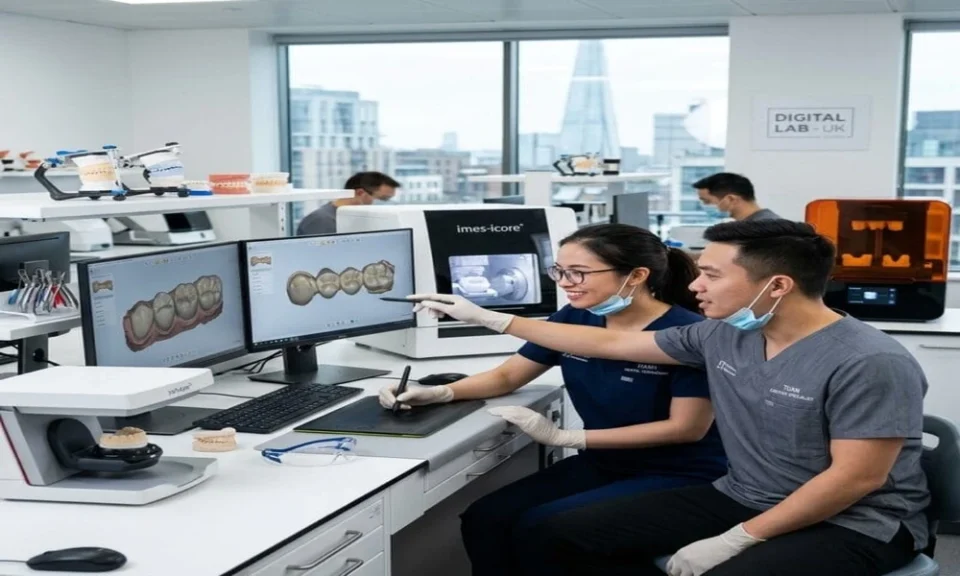
A dental clinic closes at five in the afternoon. In another part of the world, a design team is just starting its morning. That gap in time zones, once seen as an obstacle, has become one of the quiet advantages of digital dentistry.
Because scans are digital, a case can be uploaded at the end of the clinic day and be waiting for a designer when work begins overseas. By the time the dentist arrives the next morning, the design may already be finished and ready for approval. What used to take days of back-and-forth can compress into a single overnight cycle.
This works best when the handoff is well organized. Clear prescriptions, good scans, and precise notes about material and shade allow the designer to work without waiting for clarification. When questions do come up, they can be answered inside the case record so nothing is lost between shifts.
A capable 3d dental lab partner builds this rhythm into its daily routine. Cases arrive, get checked, are designed, and are returned on a predictable schedule, which lets clinics plan patient appointments with more confidence.
There are reasonable questions to ask about this model. How are urgent cases handled? Who reviews the design before it goes back? What happens if the dentist wants a revision? Reliable providers can answer all of them plainly.
For patients, the result is simple and welcome: shorter waits between the scan and the fitting, and fewer temporary crowns worn for longer than expected. Time zones are not something patients think about, but they can quietly save days.
